
What Is Mastering? – Audio Mastering Explained
What Is Mastering? – Audio Mastering Explained
As a music producer, you’ve likely encountered the term “mastering” numerous times. However, understanding what mastering actually entails is crucial for ensuring your tracks are polished, balanced, and ready for release. So, what is mastering? At its core, mastering is the final step in the music production process that optimizes your track for distribution. It involves adjusting the loudness, tonal balance, and stereo width, and preparing the audio for various formats.
Mastering ensures that your track translates well across all playback systems, from high-end studio monitors to consumer earbuds. It involves fine-tuning the sound to achieve a professional polish, making use of both hardware and software tools. Key elements of mastering include adjusting loudness levels, enhancing tonal balance, expanding stereo width, and ensuring the track is ready for different formats and streaming platforms.
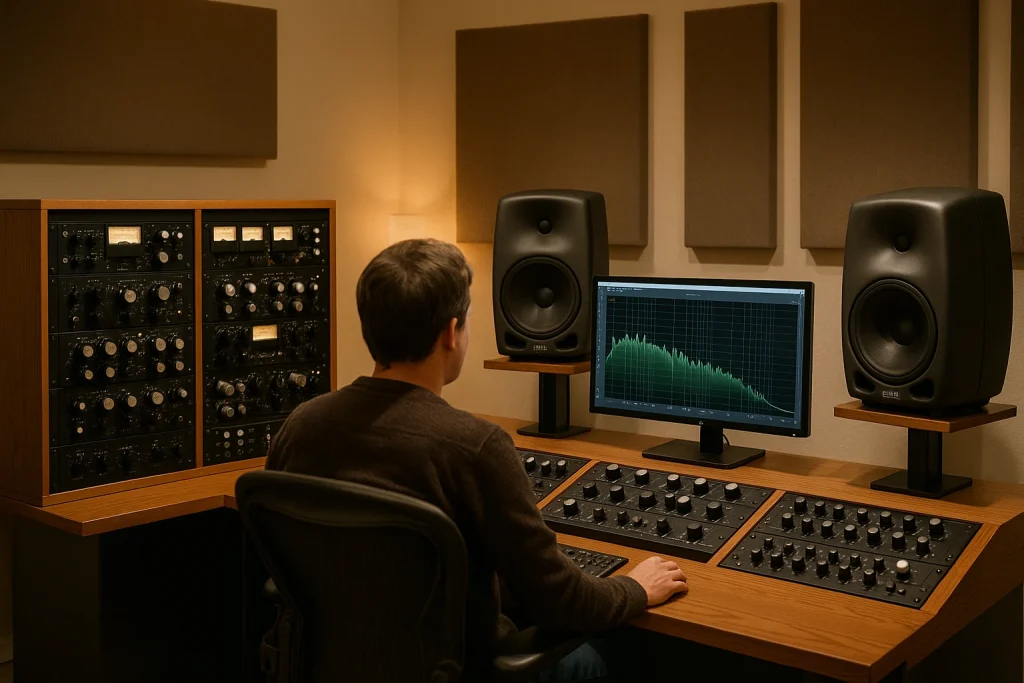
In the modern music industry, meeting the loudness standards of streaming platforms is vital. For example, Spotify recommends a level of -14 LUFS integrated, while Apple Music suggests -16 LUFS. These standards ensure a consistent listening experience across different tracks and platforms. By adhering to these standards, producers can avoid having their tracks automatically adjusted, which could negatively impact their dynamic range.
The Basics of Mastering: Loudness, Tonal Balance, and More
The process of mastering involves several crucial steps that transform your mix into a polished final product. Here, we’ll dive into the fundamental aspects of mastering and what each accomplishes for your music.
Loudness
Loudness is a critical component of mastering. Achieving the right loudness ensures your track is competitive with other tracks in its genre. This is where LUFS (Loudness Units relative to Full Scale) comes into play. Different streaming platforms have different target loudness levels, and it’s important to tailor your mastering to these standards to prevent automatic volume adjustments.
Tonal Balance
Tonal balance refers to the distribution of frequencies across the audio spectrum. A well-balanced track ensures that no frequency range overwhelms or gets lost, providing a clear and engaging listening experience. Mastering engineers use tools like equalizers to adjust the tonal balance, ensuring all elements of the track are heard as intended.
Stereo Width
Stereo width is about creating the perception of space and dimension in your track. By manipulating stereo width, mastering engineers can make your music sound more immersive and engaging. This is particularly important in genres like electronic dance music, where spatial effects play a significant role.
Format Preparation
Format preparation involves ensuring that your track is ready for distribution across various platforms and formats. This includes converting the track into the necessary file types and ensuring it meets the technical specifications required by streaming services, physical media, and more.
Tools of the Trade: Software and Hardware for Mastering
Mastering engineers utilize a combination of software plugins and hardware to achieve the desired results. Some popular software tools include iZotope Ozone, Sonnox, and the Weiss MM-1. These tools offer a suite of features for precise control over the mastering process.
For producers who prefer a hands-on approach, hardware units like compressors and equalizers are also commonly used. These analog devices can add warmth and character to a track that digital tools may not replicate as effectively.
Comparing Loudness Targets Across Streaming Platforms
Understanding the loudness targets of different streaming platforms is essential for mastering your music appropriately. Here’s a comparative table of loudness targets for popular platforms:
| Streaming Platform | Target LUFS (Integrated) |
|---|---|
| Spotify | -14 LUFS |
| Apple Music | -16 LUFS |
| Tidal | -14 to -16 LUFS |
| YouTube | -13 to -15 LUFS |
| Amazon Music | -14 LUFS |
Human vs AI Mastering: The Pros and Cons
In recent years, AI mastering services like LANDR and CloudBounce have emerged as affordable alternatives to traditional mastering. While these services offer convenience and speed, they may lack the nuanced touch that experienced human engineers provide.
Renowned mastering engineers like Bernie Grundman and Bob Ludwig bring years of expertise and a finely tuned ear to their work. Their ability to interpret the artistic intent behind a track and adjust the mastering process accordingly is often unmatched by AI technology.
Online Mastering Services: LANDR vs CloudBounce
When it comes to online mastering services, LANDR and CloudBounce are two popular options for producers looking for a quick and affordable solution. Both platforms offer a range of pricing tiers and features, but there are distinct differences between them.
LANDR
LANDR offers a simple, user-friendly interface with automated mastering. It provides several pricing tiers, including a subscription model that allows unlimited masters per month. LANDR is known for its fast turnaround and integration with various music distribution platforms.
CloudBounce
CloudBounce provides a similar service but with additional customization options. It allows more control over the final sound, with options to adjust EQ, compression, and other parameters. CloudBounce also offers batch processing, making it a convenient choice for producers with multiple tracks.
Human Mastering Engineers: The Art and Craft
While AI and online services offer convenience, human mastering engineers bring an irreplaceable artistic touch. Engineers like Bernie Grundman and Bob Ludwig have mastered countless records, developing a reputation for excellence and precision. Their deep understanding of music and its emotional impact allows them to deliver masters that resonate with listeners.
Human engineers can also provide personalized feedback and suggestions for improving mixes before mastering, something AI services cannot replicate. The choice between human and AI mastering ultimately depends on the project’s needs and budget.
Getting Your Tracks Mastered: Resources and Services
Mastering is an integral part of music production, and choosing the right service or engineer can significantly impact your track’s success. Whether you’re considering AI services like LANDR or seeking the expertise of top engineers such as Bernie Grundman, it’s essential to understand what each option offers. For those looking to scale their music production without the hassle, consider exploring professional services like The Ghost Production’s music production services.
Additionally, if you’re in the market for unique tracks that are ready for release, you might explore options to buy exclusive ghost-produced tracks. This can be a valuable resource for maintaining a consistent output without compromising on quality.
Frequently Asked Questions
What is mastering in music production?
Mastering is the process of finalizing a track for distribution by adjusting loudness, tonal balance, stereo width, and format preparation. It ensures the track sounds polished across all playback systems.
Why is mastering important for streaming platforms?
Mastering is crucial for streaming because it ensures your track meets the loudness standards of platforms like Spotify and Apple Music, providing a consistent listening experience and preventing automatic volume adjustments.
What tools are commonly used in mastering?
Popular tools for mastering include software like iZotope Ozone, Sonnox, and Weiss MM-1, as well as hardware units such as compressors and equalizers for analog processing.
How do online mastering services compare to human engineers?
Online services like LANDR and CloudBounce offer affordable and quick mastering solutions, but they may lack the nuanced touch and artistic feedback that experienced human engineers provide.
Where can I get my tracks mastered professionally?
You can use AI services like LANDR or hire renowned engineers like Bernie Grundman. For comprehensive music production services, consider The Ghost Production for expert assistance.
Last updated:
Ready to Scale Your Music Output?
Release more music, hit more deadlines, and build a stronger catalog — with professional ghost production that sounds exactly like you.