
CDJ vs Controller – What to Use
CDJ vs Controller – What to Use
In the ever-evolving landscape of DJing, the debate between using CDJs and controllers has been a hot topic for years. As technology advances, both options have developed distinct advantages and disadvantages, making the choice more complex than ever. With 2026 offering a myriad of options, DJs and producers need to make informed decisions based on their needs, environments, and goals.
CDJs, pioneered by brands like Pioneer DJ, have become the club standard globally. Clubs from Berlin to Ibiza rely on them for their reliability and intuitive design. On the other hand, DJ controllers offer flexibility and affordability, attracting bedroom DJs and those who perform in various settings beyond the traditional club scene. This comprehensive guide will delve into the pros and cons of each, providing valuable insights for both aspiring and seasoned DJs.
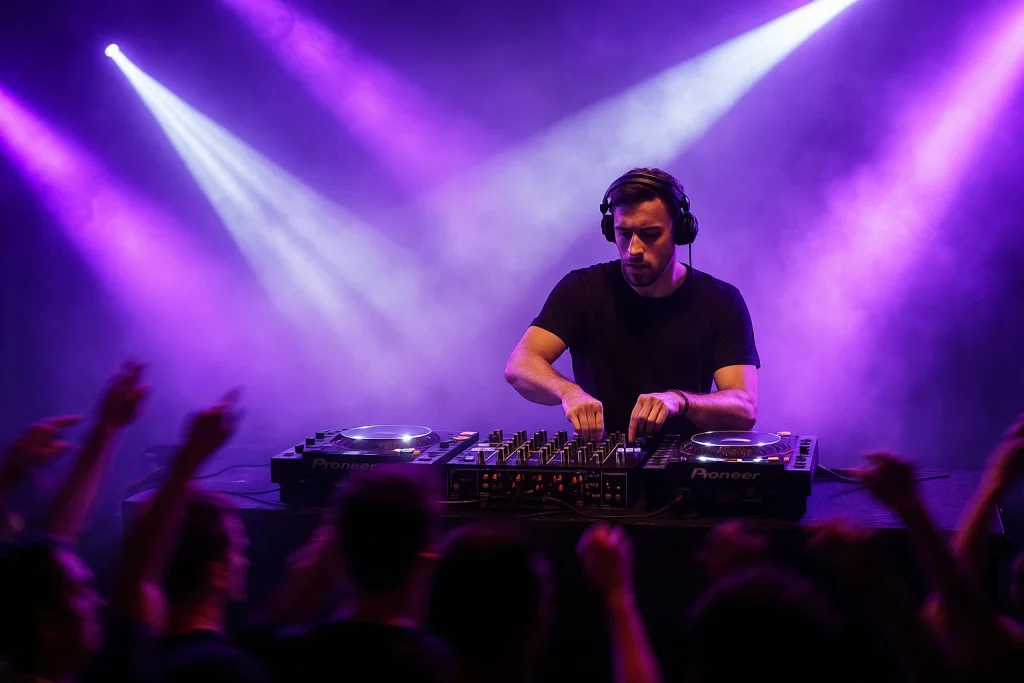
Whether you’re performing at a festival or crafting your unique sound in a studio, understanding the differences and capabilities of CDJs and controllers is crucial. We’ll explore real-world statistics, industry examples, and actionable advice to help you make the best choice for your DJing journey.
The Evolution of DJ Technology
The journey of DJ technology is a fascinating one, with the battle between CDJs and controllers being a relatively recent development. In the late 1990s, CDJs revolutionized the industry by replacing vinyl turntables, offering DJs a digital format with the tactile feel of traditional setups. By the mid-2000s, they had established themselves as the de facto standard in clubs worldwide.
Controllers, however, emerged as a game-changer in the late 2000s, offering a more portable and cost-effective solution. With advancements in DJ software like Rekordbox, Serato, and Traktor, controllers started gaining ground, especially among home DJs and mobile performers. As of 2026, both systems coexist, each catering to different segments of the DJ community.
For more insights into the evolution of DJ technology, you can explore additional resources on DJ Mag.
Pros and Cons of CDJs
CDJs continue to be the backbone of professional DJ setups, especially in clubs and festivals. Their durability and club-standard status make them a top choice for many DJs.
Advantages of CDJs
- Reliability: Known for their robustness, CDJs rarely malfunction, even under extreme conditions.
- Club Standard: As the industry standard, using CDJs ensures familiarity at venues worldwide, minimizing setup time.
- Standalone Operation: CDJs can function without a laptop, reducing potential technical failures.
Disadvantages of CDJs
- Cost: High initial investment, with setups often exceeding $3,000.
- Portability: Bulkier and heavier compared to controllers, making transport challenging.
- Limited Integration: Less seamless integration with some modern DJ software compared to controllers.
Pros and Cons of DJ Controllers
DJ controllers have carved out a niche in the industry, offering flexibility and affordability.
Advantages of Controllers
- Affordability: Significantly cheaper, with quality models available for under $500.
- Portability: Lightweight and compact, ideal for mobile gigs and home studios.
- Software Integration: Seamless compatibility with DJ software, enhancing creativity and control.
Disadvantages of Controllers
- Reliability: More prone to software glitches and technical issues.
- Professional Perception: Still perceived by some as less professional than CDJs.
- Dependency on Laptops: Often requires a laptop, adding a layer of complexity.
Technical Comparison: CDJs vs Controllers
When assessing CDJs and controllers, several technical aspects come into play. Below is a detailed comparison to help guide your decision-making process.
| Feature | CDJs | Controllers |
|---|---|---|
| Price Range | $1,500 – $3,500 | $200 – $1,500 |
| Weight | 15-20 lbs | 5-10 lbs |
| Connectivity | Standalone, USB, Ethernet | USB, Bluetooth, MIDI |
| Software Compatibility | Rekordbox | Serato, Traktor, Rekordbox |
| Ideal Use Case | Clubs, Festivals | Home Studios, Mobile Gigs |
For an in-depth comparison of the best controllers available in 2026, check out the Best DJ Controllers 2026 guide.
Myths vs. Realities
The DJ community is rife with myths surrounding CDJs and controllers. Let’s debunk some of the common misconceptions.
Myth: CDJs Are Always Better
While CDJs are ideal for club settings, controllers can be equally effective in the right hands and environment.
Myth: Controllers Are Only for Beginners
Many professional DJs, like Madeon and Kaytranada, have used controllers effectively in live performances, proving their versatility.
For tips on standing out with unique music, visit the Exclusive Tracks for DJs page.
Expert Tips for Choosing the Right Gear
Deciding between CDJs and controllers depends on various factors, including your goals, budget, and performance settings. Here are some expert tips to guide your decision:
- Consider Your Venue: If you perform primarily in clubs, CDJs may be the better choice. For diverse settings, consider a controller.
- Evaluate Your Budget: Controllers offer a more budget-friendly entry point, while CDJs demand a higher initial investment.
- Test Before You Buy: Visit music stores or trade shows to get hands-on experience with different models.
For advice on how to optimize your DJ setup, explore our guide on exporting from Rekordbox for CDJ use.
CDJs and Controllers in the Studio
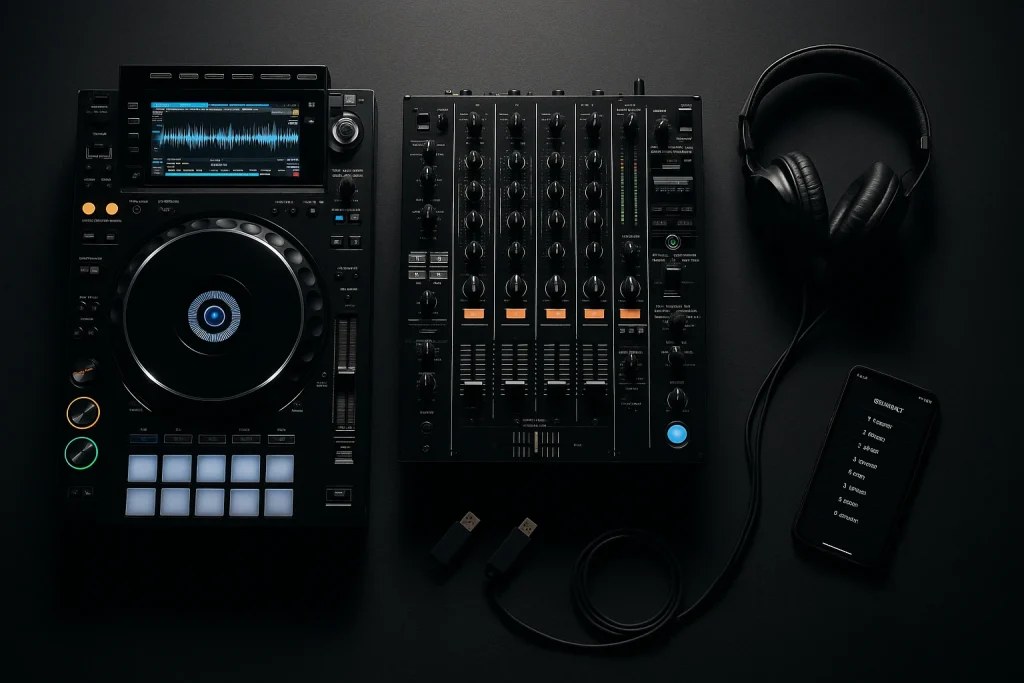
Beyond live performances, both CDJs and controllers can play a role in the studio environment. CDJs offer a tactile feel that some producers find invaluable when mixing tracks. Controllers, with their integrated software capabilities, allow for intricate track manipulation and creativity.
For producers looking to expand their track collection, this guide offers tips on acquiring exclusive music for your sets.
Maximizing Your DJ Experience
Regardless of your choice between CDJs and controllers, enhancing your DJ experience with exclusive music can set you apart. Platforms like The Ghost Production provide unique tracks that can elevate your sets to new heights.
For those considering outsourcing music production, explore music production services to get custom tracks tailored to your style.
Frequently Asked Questions
Are CDJs more reliable than controllers?
Generally, CDJs are considered more reliable due to their standalone nature and robustness, making them a staple in clubs and festivals.
Can professional DJs use controllers?
Yes, many professional DJs use controllers, especially for mobile gigs and studio production, thanks to their portability and integration with DJ software.
What should I consider when buying my first DJ setup?
Consider your budget, the venues you plan to play, and whether you need portability. Controllers offer a cost-effective and versatile solution, while CDJs are ideal for club settings.
How can I get exclusive music for my DJ sets?
You can obtain exclusive music through services like ghost-produced tracks, which offer unique and unreleased tracks tailored to your style.
Is it possible to combine CDJs and controllers in one setup?
Yes, many DJs use hybrid setups, combining CDJs with controllers to harness the benefits of both systems, offering flexibility and creativity.
Last updated:
Stand Out From Every Other DJ
The DJs who get booked and remembered play music nobody else has. Commission exclusive ghost-produced tracks and edits made specifically for your sound.