
Protecting Your Identity With a Music NDA
Learn how protecting identity with music NDA terms works, what clauses matter most, and how artists reduce risk when buying ghost-produced tracks.
Learn how protecting identity with music NDA terms works, what clauses matter most, and how artists reduce risk when buying ghost-produced tracks.
Learn how to buy ghost produced tracks with confidence, from rights and exclusivity to stems, project files, and safe release-ready delivery.
Trance music has been one of the most influential genres in electronic dance music for decades. From underground clubs in the 1990s to massive festivals like Tomorrowland and A State of Trance, trance has built a passionate global community. Behind many legendary tracks and artists are trance music record labels that discover talent, release music, and shape the sound of the genre. In this guide, we will explore the most important trance music record labels, their history, the artists behind them, and how producers can submit music to these labels. If you are searching for trance music record labels, this article will provide a complete list of the biggest labels in the trance industry. What Are Trance Music Record Labels? Trance music record labels are companies that specialize in releasing trance tracks, promoting artists, and distributing music to platforms such as Spotify, Beatport, Apple Music, and YouTube. Most trance music record labels focus on specific subgenres within trance. Trance Subgenre Description Uplifting Trance Emotional melodies and powerful breakdowns Progressive Trance Atmospheric trance with evolving structure Tech Trance Harder trance influenced by techno Vocal Trance Melodic trance featuring vocalists Psy Trance Faster trance with psychedelic sounds Many legendary artists including Armin van Buuren, Above & Beyond, Ferry Corsten, and Paul van Dyk built their careers thanks to support from major trance music record labels. Major Trance Music Record Labels Below is a list of the most influential trance music record labels that have shaped the genre. Record Label Founder / Artist Founded Style Armada Music Armin van Buuren 2003 Progressive / uplifting trance Anjunabeats Above & Beyond 2000 Melodic trance Black Hole Recordings Tiësto 1997 Classic trance Future Sound of Egypt (FSOE) Aly & Fila 2009 Uplifting trance Coldharbour Recordings Markus Schulz 2004 Progressive trance Vandit Records Paul van Dyk 1999 Classic trance Enhanced Recordings Will Holland 2004 Progressive trance Raz Nitzan Music Raz Nitzan 2007 Vocal trance Subculture John O’Callaghan 2010 Uplifting trance Outburst Records Mark Sherry 2006 Tech trance Who’s Afraid Of 138?! Armin van Buuren 2013 High energy trance Armind Armin van Buuren 2003 Progressive trance A State of Trance Armin van Buuren 2003 Festival trance Pure Trance Solarstone 2012 Classic trance Monster Tunes Darren Tate 2007 Uplifting trance Digital Society Recordings Digital Society 2014 Uplifting trance Amsterdam Trance Records Raz Nitzan 2017 Vocal trance Nocturnal Knights Music Bryan Kearney 2016 Uplifting trance Infrasonic Recordings Matt Darey 2006 Progressive trance Perfecto Records Paul Oakenfold 1989 Classic trance Garuda Music Gareth Emery 2009 Progressive trance Flashover Recordings Ferry Corsten 2005 Progressive trance Magik Muzik Tiësto 2001 Classic trance Songbird Chicane 2000 Melodic trance GO Music Giuseppe Ottaviani 2019 Uplifting trance Always Alive Recordings Daniel Kandi 2011 Uplifting trance AVA Recordings Andy Moor 2007 Progressive trance Lange Recordings Lange 2008 Progressive trance Vandit Alternative Paul van Dyk 2005 Tech trance Create Music Activa 2016 Tech trance These trance music record labels release hundreds of tracks every year and dominate Beatport trance charts. The Biggest Trance Music Record Labels Explained Armada Music Armada Music is one of the most successful trance music record labels in the world. It was founded by Armin van Buuren, Maykel Piron, and David Lewis. The label operates several well-known trance sublabels including: Armada releases music from artists such as: Official websitehttps://www.armadamusic.com Anjunabeats Anjunabeats is another legendary name among trance music record labels. The label was founded by Above & Beyond in 2000. Anjunabeats helped popularize melodic progressive trance and launched the careers of many producers. Artists associated with the label include: Black Hole Recordings Black Hole Recordings is one of the oldest trance music record labels still active today. It was founded in the Netherlands by Tiësto and Arny Bink. This label released many classic trance tracks during the early 2000s. Important sublabels include: Future Sound of Egypt Recordings Future Sound of Egypt Recordings was created by Aly & Fila and has become one of the most respected trance music record labels focused on uplifting trance. Artists on the label include: Coldharbour Recordings Coldharbour Recordings was founded by Markus Schulz and is one of the most recognizable progressive trance music record labels. The label releases darker progressive trance and tech trance styles. Artists include: Emerging Trance Music Record Labels While large labels dominate the industry, many smaller trance music record labels are discovering new talent and pushing the genre forward. Label Focus Nocturnal Knights Uplifting trance Amsterdam Trance Records Vocal trance Monster Tunes Uplifting trance Always Alive Recordings Uplifting trance AVA Recordings Progressive trance GO Music Uplifting trance Create Music Tech trance These smaller trance music record labels often provide opportunities for upcoming producers to release their first professional tracks. How to Submit Tracks to Trance Music Record Labels If you want to release music on trance music record labels, follow these steps. Finish a Professional Production Before sending demos to trance music record labels, make sure your track is professionally mixed and mastered. Research the Label Sound Every label has a unique sound. Some trance music record labels focus on uplifting trance, while others specialize in progressive or tech trance. Prepare a Demo Package When submitting to trance music record labels, include: Why Trance Music Record Labels Still Matter Even in the era of streaming platforms, trance music record labels remain extremely important for artists. Benefit Explanation Distribution Labels release music on Beatport, Spotify and Apple Music Promotion Labels promote music to DJs and playlists Industry connections Labels connect producers with festivals and events Credibility Being signed to trance music record labels builds reputation Many successful DJs built their careers through releases on major trance music record labels. References Beatportalhttps://www.beatportal.com Black Hole Recordingshttps://www.blackholerecordings.com Armada Musichttps://www.armadamusic.com Anjunabeatshttps://anjunabeats.com FAQ What are the biggest trance music record labels? Some of the biggest trance music record labels include Armada Music, Anjunabeats, Black Hole Recordings, Future Sound of Egypt, and Coldharbour Recordings. What trance music record labels accept demos? Many trance music record labels accept demos including Armada Music, Enhanced Recordings, Raz Nitzan Music, and Subculture. What are the
See how an EDM ghost producer marketplace works, what buyers receive, and how exclusive tracks, rights transfer, and custom production reduce risk.
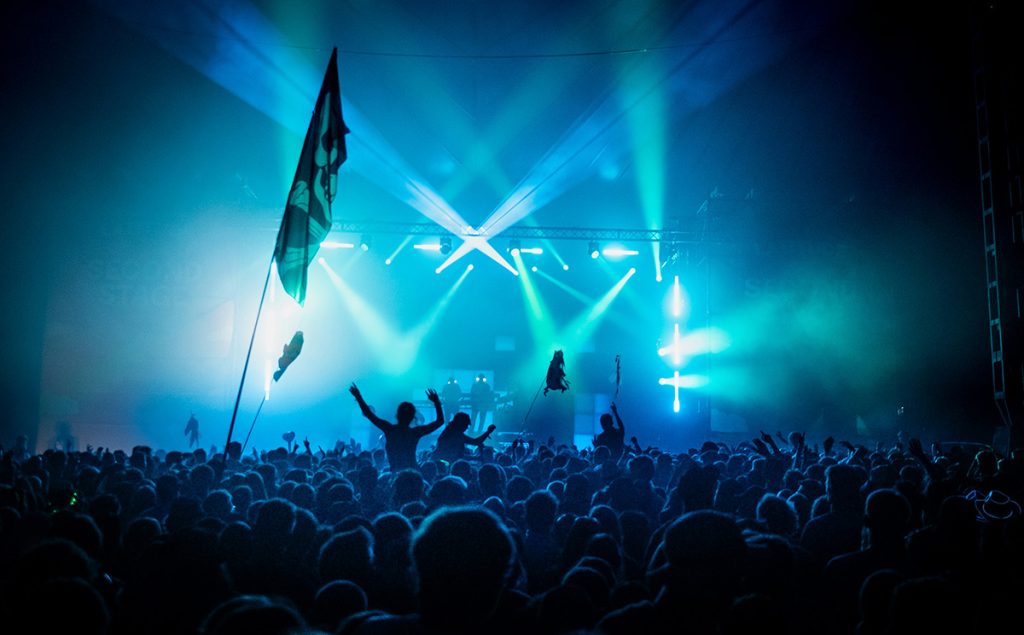
If you’ve ever attended a music festival, listened to club hits, or explored modern electronic genres, you’ve probably wondered what is EDM music. EDM music, short for Electronic Dance Music, is a broad genre of electronic music designed primarily for dance environments such as clubs, festivals, and parties. It is produced using digital instruments, synthesizers, drum machines, and music production software. Over the last two decades, EDM music has grown into one of the most dominant global music movements. Artists like Avicii, Calvin Harris, Martin Garrix, and David Guetta helped bring electronic dance music from underground clubs to mainstream charts. Today, EDM music can be heard everywhere. From nightclubs and radio stations to massive festivals and streaming platforms, electronic dance music continues to shape modern music culture. What Is EDM Music? Definition and Meaning To understand what EDM music is, it’s important to look at the meaning behind the term. EDM music refers to a group of electronic music styles that share several common characteristics: • Created primarily with electronic instruments• Designed to make people dance• Often features repetitive beats and rhythmic patterns• Built around drops, builds, and energetic melodies Most EDM tracks typically have a tempo between 110 and 150 BPM, depending on the subgenre. Unlike traditional band music that uses guitars, bass, and live drums, EDM producers create tracks using digital tools such as synthesizers, MIDI instruments, and plugins. Popular music production software used to create EDM music includes: • Ableton Live• FL Studio• Logic Pro These tools allow producers to design sounds, arrange tracks, and mix music entirely digitally. The History of EDM Music Understanding what EDM music is today requires looking at how the genre evolved over time. 1970s – Early Electronic Sounds The foundations of EDM music started in the 1970s when artists began experimenting with synthesizers and electronic instruments. Electronic pioneers such as Kraftwerk played a huge role in shaping the early electronic music landscape. 1980s – House and Techno During the 1980s, two important genres emerged that would influence EDM music for decades. Genre Origin Characteristics House Music Chicago Groove-based beats and soulful vocals Techno Detroit Futuristic sounds and mechanical rhythms These genres laid the foundation for the modern electronic dance music scene. 1990s – The Rise of Rave Culture In the 1990s, EDM music exploded within underground rave scenes across Europe and the United Kingdom. New genres emerged, including: • Trance• Drum & Bass• Hardcore Large warehouse parties and rave festivals became cultural movements centered around electronic dance music. 2010s – Global EDM Explosion The 2010s marked the global breakthrough of EDM music. Major festivals such as Tomorrowland, Ultra Music Festival, and Electric Daisy Carnival attracted hundreds of thousands of fans. Artists like Avicii, Swedish House Mafia, Calvin Harris, and Martin Garrix helped EDM dominate global charts. What Is EDM Music Made Of? Key Characteristics If you’re trying to understand what EDM music sounds like, there are several defining features. Strong Rhythmic Beats Most EDM tracks use a four-on-the-floor drum pattern, meaning the kick drum hits on every beat. This creates a steady rhythm perfect for dancing. Build-Ups and Drops One of the most recognizable elements of EDM music is the build-up and drop structure. A typical EDM song structure often includes: The drop is usually the most energetic part of the track, where the beat and bass hit hardest. Synthesizers and Electronic Sound Design EDM music heavily relies on synthesizers to create unique sounds such as: • Lead synths• Basslines• Pads• Arpeggios Producers often design their own sounds using virtual instruments and plugins. High Energy and Festival Atmosphere EDM music is built to create excitement and energy on dance floors and festival stages. Powerful basslines, emotional melodies, and dramatic transitions are common features. Popular EDM Music Genres EDM is not just one style. It includes many different genres under the electronic dance music umbrella. EDM Genre BPM Range Description House 118–130 BPM Groove-based dance music with steady rhythm Techno 120–135 BPM Dark and hypnotic repetitive beats Trance 128–140 BPM Emotional melodies and uplifting builds Dubstep 140 BPM Heavy bass and aggressive drops Drum & Bass 170–175 BPM Fast breakbeats and deep basslines Progressive House 124–128 BPM Melodic builds and atmospheric sounds Each genre has its own identity while still belonging to the EDM music category. How EDM Music Is Produced To fully understand what EDM music is, it helps to see how producers create it. Most EDM tracks are produced through several stages. Beat Creation The producer first designs the drum pattern using kick drums, snares, and hi-hats. Bassline Design Next comes the bassline, which provides groove and power to the track. Melody and Chords Melodic elements such as piano chords, synth leads, or vocal samples are then added. Arrangement The track is structured with sections like intro, build-up, drop, and breakdown. Mixing and Mastering Finally, the track is mixed and mastered so it sounds professional on club sound systems, streaming platforms, and radio. Why EDM Music Is So Popular There are several reasons why EDM music has become one of the most popular genres worldwide. Festival Culture Electronic dance music thrives in festival environments where huge stages, lighting effects, and massive crowds create unforgettable experiences. Global Accessibility Streaming platforms such as Spotify and YouTube allow EDM music to reach audiences worldwide instantly. DJ Performances Unlike traditional concerts, EDM artists perform DJ sets where they mix tracks live and control the crowd’s energy. Cross-Genre Collaborations EDM artists often collaborate with pop singers and hip-hop artists, expanding the genre’s reach to new audiences. Tools and Resources for EDM Producers If you are interested in producing EDM music or performing as a DJ, there are several useful resources available. You can learn how to structure a DJ set using the DJ Set Planner tool:https://theghostproduction.com/dj-set-planner/ Producers looking for professional tracks can also explore ready-to-release EDM music here:https://theghostproduction.com/ These tools help DJs organize their sets and discover new music from producers around the world. External Resource About EDM Music For a deeper overview of
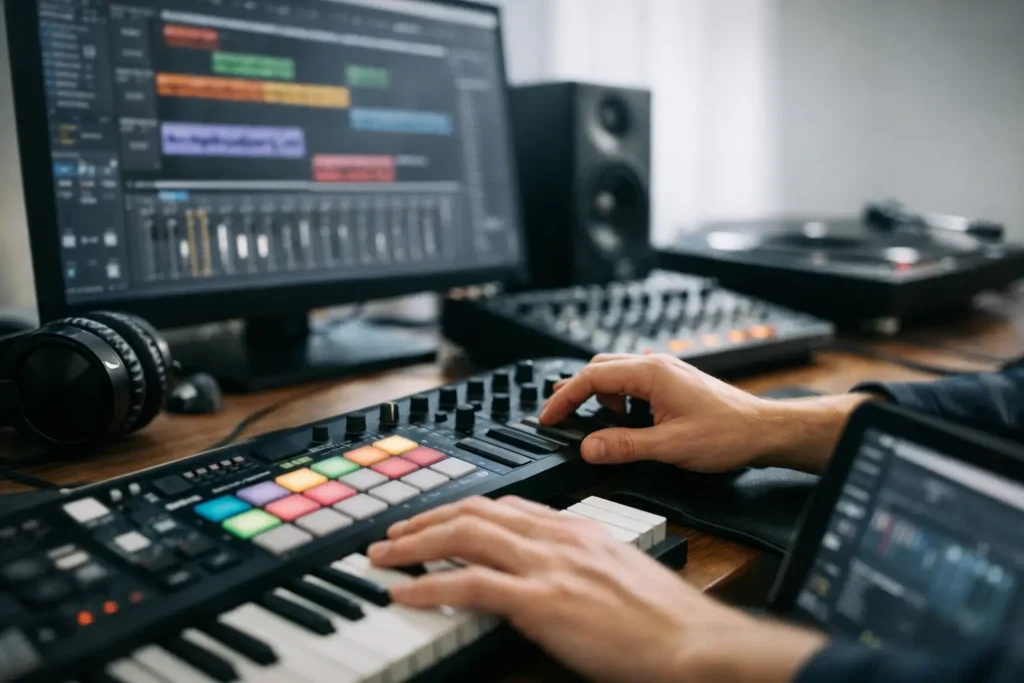
Need a Tech House ghost production custom track? Get exclusive, release-ready music with stems, project files, full rights, and NDA protection.
In this guide, we highlight the best female techno DJs in 2026 who are dominating festivals, clubs, and the global electronic music scene. Techno continues to dominate the global electronic music scene, and in 2026 female DJs are playing a huge role in shaping the genre. From underground warehouse raves to the biggest festival stages, female techno artists are pushing boundaries with powerful sets, innovative productions, and unique musical identities. In this article, we explore the best female techno DJs in 2026, highlighting artists who are leading the scene and influencing the next generation of producers and DJs. Charlotte de Witte Charlotte de Witte remains one of the biggest names in techno worldwide. The Belgian DJ and producer has built an empire through her dark, driving techno sound and relentless touring schedule. She has headlined the world’s biggest festivals including Tomorrowland, Awakenings, and Ultra. Her label KNTXT continues to release cutting-edge techno while supporting new talent. Charlotte’s sets are known for their hypnotic rhythms, heavy kicks, and intense atmosphere, making her a staple in the techno scene. Why she stands out: Amelie Lens Amelie Lens has become one of the most influential techno artists of the decade. Known for her high-energy sets and fast-paced techno, she has built a powerful brand around her label EXHALE. Her events and label releases have helped launch many new techno producers while maintaining a consistent sound that resonates with underground and mainstream audiences alike. Amelie Lens frequently performs at top venues such as Berghain, Fabric, and Printworks. Highlights: Nina Kraviz Russian techno icon Nina Kraviz continues to be one of the most recognizable figures in the global techno scene. Her eclectic sets blend techno, acid, electro, and experimental sounds. Beyond DJing, she runs the influential label трип (Trip Recordings) which has become a hub for cutting-edge electronic music. Nina Kraviz is known for her unpredictable DJ sets that often surprise audiences with rare tracks and unexpected transitions. Why she remains relevant: ANNA Brazilian techno powerhouse ANNA has become one of the most respected producers in techno. Her productions often combine melodic elements with driving techno energy. She has released music on labels such as Afterlife, Drumcode, and Kompakt, gaining widespread recognition for her powerful productions. Her live performances are known for their emotional depth and atmospheric build-ups. Key achievements: Deborah De Luca Deborah De Luca is one of the most popular techno DJs in the world, especially known for her energetic performances and strong connection with fans. Her sets combine techno with minimal and tech-house influences, creating a powerful festival-ready sound. With millions of followers across social media platforms, Deborah has built a loyal global audience. Why fans love her: Indira Paganotto Indira Paganotto is one of the most exciting techno artists of the new generation. Her sound blends techno with psy-trance elements, creating a fast, hypnotic experience. Her label ARTCORE has helped shape a new sub-style within techno that mixes psychedelic textures with powerful rhythms. Indira regularly performs at festivals such as Tomorrowland, Awakenings, and Ultra. What makes her unique: Rebekah Rebekah is widely respected in the underground techno community for her raw, uncompromising sound. Her music focuses on heavy industrial techno and powerful percussive elements. She is also a strong advocate for mental health awareness within the music industry. Key traits: VTSS VTSS has quickly become one of the most talked-about techno artists in recent years. Her sets combine techno, trance, and hard dance influences, creating a unique and unpredictable sound. She is known for her energetic stage presence and dynamic performances. Highlights: Sama’ Abdulhadi Palestinian DJ Sama’ Abdulhadi has become a powerful symbol of techno culture in the Middle East. Her Boiler Room performance in Ramallah became one of the most iconic techno sets online. She continues to represent the underground techno movement while performing at major venues around the world. Why she stands out: Paula Temple Paula Temple is known for her dark, industrial techno style and experimental sound design. Her sets are intense, aggressive, and deeply immersive. She has released music on labels such as Noise Manifesto and continues to influence the harder side of techno. Key features: The Rise of Female Techno DJs Over the past decade, female techno DJs have become some of the most influential artists in electronic music. From underground clubs to massive festivals like Tomorrowland and Awakenings, female techno DJs are redefining the genre with powerful sets and innovative productions. Why Female Techno DJs Are Dominating the Global Scene The techno scene has evolved dramatically over the past decade. Female DJs are now headlining festivals, running labels, and shaping the direction of electronic music. Several factors contribute to this rise: Today, female techno DJs are not only performing but also leading creative innovation within the genre. The Future of Female Techno Artists Looking ahead to the next few years, the influence of female techno DJs will continue to grow. New artists are emerging from scenes in Europe, South America, and Asia, bringing fresh sounds and perspectives. With technology making music production more accessible, we can expect even more talented female producers entering the techno scene. Final Thoughts The influence of female techno DJs continues to grow every year as more artists push the boundaries of techno and electronic music. The techno scene in 2026 is more exciting than ever, and female DJs are at the forefront of its evolution. Artists like Charlotte de Witte, Amelie Lens, Nina Kraviz, and Indira Paganotto continue to push the genre forward while inspiring the next generation of techno producers. Whether performing at underground clubs or massive festivals, these artists prove that female techno DJs are shaping the future of electronic music. FAQ Who is the most famous female techno DJ? Charlotte de Witte and Amelie Lens are widely considered among the most famous female techno DJs in the world. Are there many female techno producers? Yes. The number of female techno producers has grown rapidly in recent years, with many artists releasing music on major techno labels.
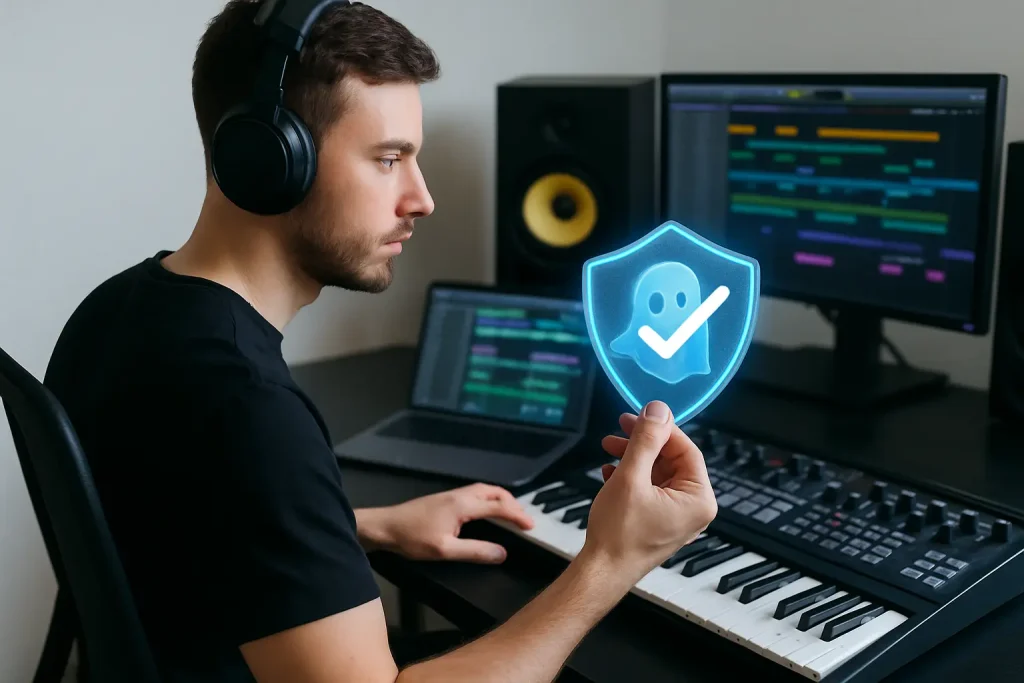
Need verified ghost producers for EDM releases? Learn how to vet quality, secure full rights, protect confidentiality, and release faster with confidence.
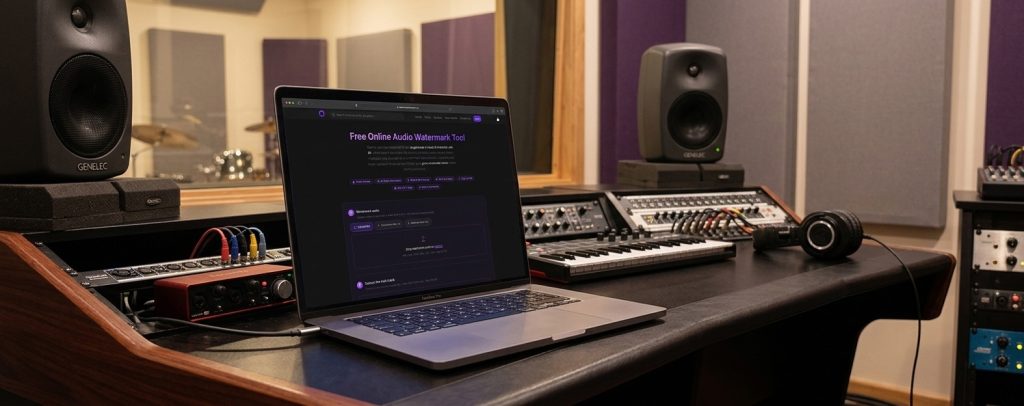
The music industry in 2026 is more digital than ever. Tracks move between producers, DJs, labels, and clients in seconds. While this makes collaboration easier, it also creates a serious problem: music leaks and unauthorized distribution. This is where audio watermark tools become essential. Audio watermarking allows you to embed an identifier, voice tag, or hidden signature into a track so you can track ownership and protect your work. These watermarks can be audible such as voice tags or invisible and embedded into the audio signal. In this guide we will cover the best audio watermark tools in 2026, including free and professional solutions used by producers, music libraries, labels, and ghost production platforms. What Is Audio Watermarking? Audio watermarking is a technique that embeds hidden data or identifiers inside an audio file while maintaining the original listening experience. The watermark allows the audio to be traced back to its source without affecting sound quality. Watermarks can serve several purposes: • Protect unreleased tracks• Track piracy and leaks• Identify ownership• Verify authenticity• Add branding to demos or previews Some watermarking systems embed imperceptible markers in the audio spectrum, while others use audible voice tags or jingles. For music producers and DJs sharing demos, audible watermarks remain the most practical solution. Best Audio Watermark Tools in 2026 (Comparison) Here is a quick comparison of the best tools available today. Tool Type Best For Key Features The Ghost Production Audio Watermark Tool Online Producers & DJs AI voice watermark, browser-based AG Watermark Generator Desktop Music studios Custom watermark embedding Watermark Pro X Enterprise Large music catalogs High-speed watermark processing SoundShield Desktop Independent creators Easy interface Audiowmark Developer Technical users Embedded spectral watermark The Ghost Production Audio Watermark Tool (Best Free Online Tool) The Audio Watermark Tool by The Ghost Production is one of the most flexible free tools available online. It was designed specifically for music producers, ghost producers, and DJs who need to protect demo tracks before sending them to labels or clients. Unlike most watermarking tools that require installing software, this tool works directly in your browser. Key features include: • Upload your own watermark jingle• Generate an AI voice watermark automatically• Set watermark interval and volume• Fade in and fade out control• Crop audio• Export in WAV or MP3 up to 320 kbps• Supports formats such as MP3, WAV, FLAC, AAC, OGG and M4A• Fully private browser processing The watermark audio can be generated using AI voice or uploaded manually. The watermark can repeat across the track at custom intervals to prevent clean extraction. Most importantly, the tool runs entirely in your browser meaning files are never uploaded to a server. AG Watermark Generator AG Watermark Generator is a professional desktop tool designed to add watermarks to audio files quickly. It is widely used in music libraries and licensing platforms that need to watermark large numbers of tracks. Key features: • Custom watermark audio• Batch processing• High quality watermark embedding• Professional music library workflows This tool focuses more on large scale audio catalog management than individual producers. Watermark Pro X Watermark Pro X is designed for enterprise environments where thousands of tracks need to be processed quickly. Features include: • High speed batch watermarking• Robust watermark algorithm• Enterprise audio processing• Large catalog workflows This solution is typically used by record labels, streaming services and licensing agencies. SoundShield SoundShield is a simple desktop tool focused on usability. It is commonly used by independent creators who want a straightforward watermarking workflow. Features include: • Beginner friendly interface• Quick watermark insertion• Suitable for small music catalogs Audiowmark Audiowmark is an open source watermarking engine used mostly by developers and researchers. The software embeds a 128 bit message into an audio file creating a watermark that is usually inaudible to listeners. Features include: • Invisible watermark embedding• Open source implementation• Developer focused workflow Why Audio Watermarking Is Important in 2026 As digital music distribution continues to grow, protecting intellectual property has become more important. Audio watermarking is widely used in several industries. Music licensing platforms use watermarking to track song usage and royalty payments. Film studios use forensic watermarking technologies such as Cinavia to prevent unauthorized copying of audio content. With the rise of AI generated content, watermarking is also used to verify authenticity and identify synthetic media. Audible vs Invisible Watermarks There are two main types of audio watermarking. Audible watermarks are voice tags or repeating identifiers placed inside the track. These are commonly used for demo tracks, beat previews and ghost production demos. Invisible watermarks embed hidden information inside the audio spectrum using techniques like frequency modulation or phase coding. Invisible watermarking is usually used for copyright tracking and forensic identification. How Producers Use Audio Watermarks Music producers commonly use watermarking when: • Sending demos to record labels• Sharing previews with clients• Selling beats online• Uploading preview versions of ghost produced tracks Instead of sending a clean track, producers send a watermarked version that cannot easily be reused. Best Practices for Audio Watermarking To protect your music effectively follow these practices. Place watermarks multiple times throughout the track. Avoid predictable intervals so the watermark cannot easily be removed. Keep the watermark audible but not too loud. Some producers combine both audible watermarks and invisible watermarks for maximum protection. Frequently Asked Questions What is the best audio watermark tool? The best audio watermark tool depends on your workflow. For producers and DJs the Audio Watermark Tool from The Ghost Production is one of the easiest and fastest free solutions available online. How do you watermark music? To watermark a song you typically: Can audio watermarks be removed? Some simple watermarks can be removed by editing the audio, but repeating watermarks throughout a track makes removal much more difficult. Why do producers watermark demo tracks? Watermarking prevents unreleased tracks from being stolen or distributed without permission and helps identify the source of a leak. Final Thoughts Audio watermarking has become an essential tool for protecting music in the modern digital industry. Whether
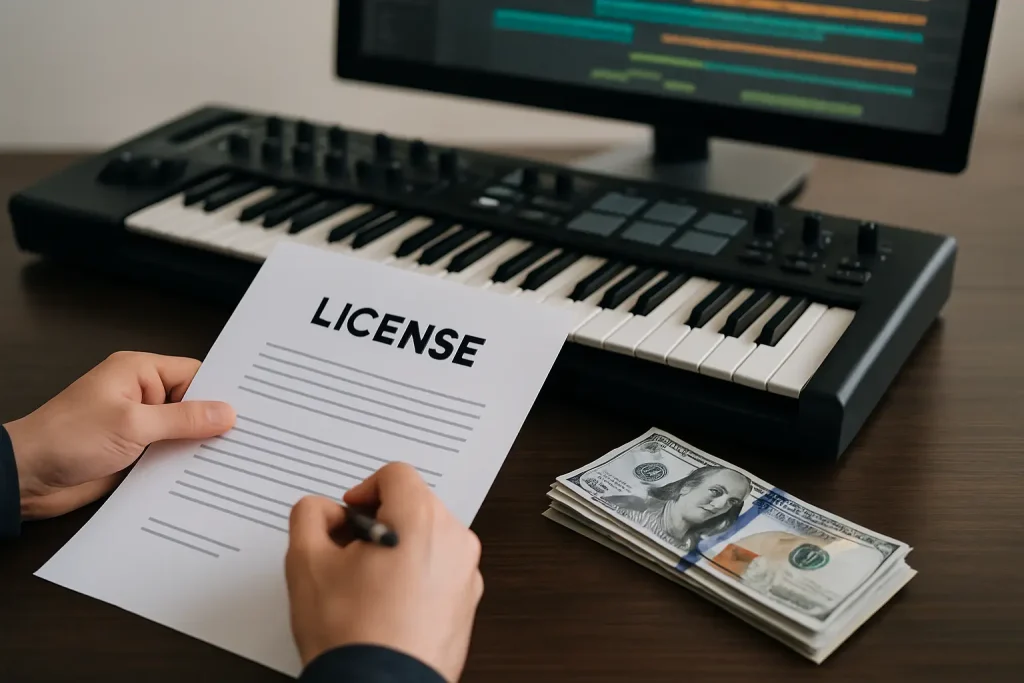
Learn how one time sale EDM tracks work, what rights you receive, what files are included, and how to release fast with total exclusivity.